Hockey Net Vector SVG Files
First Impression: Clean, Sporty, and Ready for Stitching
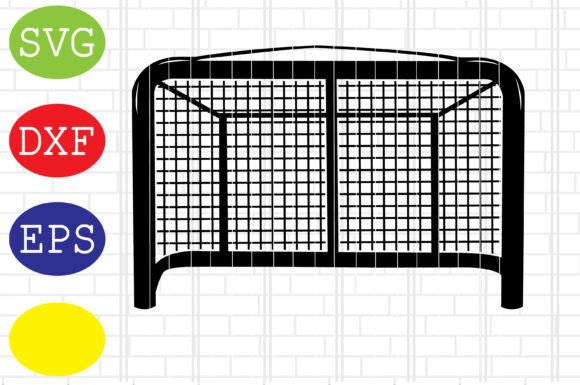
When I opened the Hockey Net Vector SVG Files zip folder, my eye went straight to the silhouette—sharp angles, balanced negative space, and that unmistakable hockey net shape: tight diamond pattern, sturdy uprights, and a subtle curve at the base. It’s not overly ornate, nor is it minimalist to the point of abstraction. It lands right where most embroidery designers want it: recognizable at a glance, scalable without losing integrity, and built with vector logic that translates well to stitch paths. As someone who’s digitized hundreds of sports motifs, I appreciated how the design avoids tiny interior lines or fragile corners—common pitfalls in poorly constructed vectors meant for embroidery.
A Real Project Test: Embroidering a Custom Sweatshirt for a Local Youth Team
Last week, I used Hockey Net Vector SVG Files to create embroidered sweatshirts for a 10-year-old’s hockey team fundraiser. We chose a midweight cotton-poly blend hoodie, medium-dark navy, and stitched the net centered on the left chest. The result? Crisp, confident, and instantly legible—even from across the rink. Because the vector was cleanly layered (no overlapping anchor points or stray nodes), converting it to an embroidery file was straightforward. No jagged edges, no unexpected gaps in the fill areas. That matters: when you’re stitching 30+ identical pieces for a small shop product or Etsy order, consistency is non-negotiable.
Where This Design Shines—and Where It Needs Thought
Hockey Net Vector SVG Files works beautifully on structured, stable fabrics: canvas tote bags, twill aprons, denim jackets, and medium-weight tea towels. Its open geometry allows for clean satin-stitched borders and breathable fill-stitch zones—ideal for avoiding puckering or thread buildup on thicker garments. I’ve also used it successfully as an applique design on baby onesies (paired with soft knit stabilizer) and as a focal motif on holiday-themed pillow covers—think “Hockey Santa” or “Winter Sports Family” collections.
But here’s what I’d flag for fellow designers and craft business owners: avoid using this design full-size on highly textured fabrics like terry cloth or bouclé knits—the net’s fine grid can blur visually if the fabric surface interrupts stitch definition. Likewise, on stretchy performance tees or curved cap fronts, scale down to 2.5–3 inches wide and reinforce with cutaway + tear-away stabilizer combo. And while the vector includes no text, if you plan to add player names or team logos nearby, leave breathing room—the net’s visual weight holds attention, so clutter around it weakens impact.
What It Adds to Your Handmade Product—and What It Doesn’t Promise
This isn’t a flashy, glitter-effect design. It doesn’t come with animated gradients or layered shadows. What it delivers is quiet professionalism: a solid, versatile graphic asset that supports your brand—not overshadows it. When customers see it on a custom embroidered tote bag or a boutique kitchen towel, they read “thoughtful detail,” not “clip art.” That builds trust, especially for Etsy sellers and small shop owners positioning themselves as skilled makers rather than resellers.
It also scales intelligently. At 1.75 inches, it reads clearly on a child’s cap. At 4.5 inches, it anchors a large sweatshirt front without overwhelming. And because the vector files include SVG, EPS, DXF, and JPG, you can preview it in mockup tools, prep it for laser-cut patches, or adapt it for screen-printed transfers—all part of a modern craft business workflow.
Practical Notes Every Embroidery Designer Should Check
- Test first on scrap fabric—especially if pairing with dark thread on light fabric or vice versa. Contrast changes how the net’s openness reads.
- Review stitch density before finalizing. Dense fills in the diamond pattern may need slight thinning for lightweight fabrics.
- Confirm hoop size compatibility. The clean vector layout means minimal repositioning, but always verify your machine’s max hoop dimensions match your intended placement.
- Inspect small details at 200% zoom—look for stray anchor points or hairline overlaps that could cause stitch errors.
- Try black-and-white mockups to assess silhouette strength. A strong vector should hold up even without color.
- Use appropriate stabilizer: cutaway for knits, tear-away for stable wovens, and fusible + tear-away for lightweight linens.
- Verify licensing before selling finished products or digital embroidery files derived from Hockey Net Vector SVG Files—this is critical for Etsy sellers and commercial embroidery shops.
Final Thought: A Reliable, Repeatable Asset for Craft Business Growth
If you’re building a collection of winter sport-themed design assets—or launching a line of personalized gifts for hockey families, coaches, or alumni—you’ll reach for Hockey Net Vector SVG Files again and again. It’s not trendy; it’s timeless. Not loud; it’s intentional. And unlike many graphics labeled “Crafts” or “Graphics,” it behaves like a true embroidery file foundation—not just a pretty picture. For apparel decorators, small shop owners, and creative entrepreneurs, that reliability saves time, reduces rework, and elevates how your handmade product feels to the person holding it. That’s the kind of detail that turns a one-time buyer into a repeat customer—and that’s why I keep this file in my active project folder.