Wildflower Mama Sublimation PNG, Mom Png
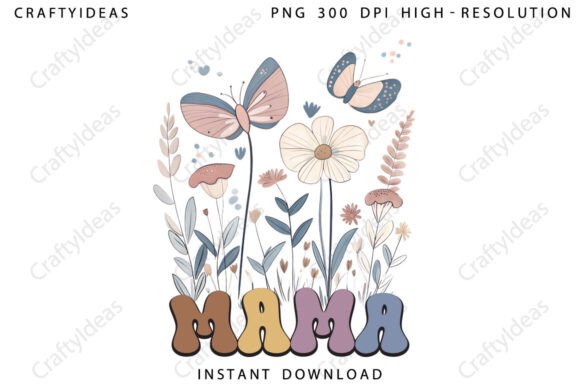
As a designer who’s stitched over 200 custom embroidery projects for Etsy sellers, boutique brands, and local craft fairs—and reviewed hundreds of digital design assets—I opened Wildflower Mama Sublimation PNG, Mom Png expecting softness, but not quite this kind of quiet confidence. It’s not loud or trendy; it’s grounded. Think wildflowers pressed between the pages of a well-loved journal—delicate stems, uneven petals, subtle asymmetry. That’s the mood: gentle reverence, not floral overload. The layout leans slightly vertical, with “Mama” centered in a light, hand-drawn script, flanked by loose botanical elements—daisies, lavender sprigs, maybe a trailing vine. No heavy outlines. No clipart stiffness. Just breathable negative space and organic flow.
I tested it first on a linen-cotton tea towel—intended as a Mother’s Day gift for a client’s small shop. Right away, the design’s strength became clear: it doesn’t shout. It invites. On fabric, it reads as handmade even before stitching begins. That matters—especially for craft businesses where perceived authenticity drives buyer trust. When digitized for machine embroidery, the shape holds up beautifully at 3.5"–4.5" wide, making it ideal for tote bag designs, pillow covers, and aprons. I’ve seen similar motifs collapse into mush on sweatshirt embroidery if the fill stitch density isn’t balanced—but here, the open composition gives the stitches room to breathe. No dense satin-stitch traps. No tiny lettering that blurs into a blob on baby embroidery.
Where it shines most is in personalization without complication. A small-batch seller could pair Wildflower Mama Sublimation PNG, Mom Png with a neutral-toned organic cotton onesie and a single-color thread match (oatmeal, sage, or dusty rose), and instantly elevate a simple item into a meaningful, boutique-level finished product. Same goes for embroidered patches—its clean edges and moderate detail translate cleanly to applique design workflows. For holiday embroidery or nursery decor, it avoids cliché while still feeling seasonally warm. It’s spring png energy without Easter bunnies or pastel overload.
But let’s be real: not every surface welcomes it equally. On highly textured fabrics like bouclé knit or thick terry cloth, some of the finer stem lines risk getting lost unless you adjust stitch length and use medium-weight cutaway stabilizer. On stretchy fabric—say, a ribbed cotton blend tee—the design’s vertical emphasis means you’ll want to hoop carefully and consider a light tear-away + topping combo to prevent puckering around the script. And while it works on dark fabric, test your thread colors first: a pale yellow satin stitch on charcoal can look washed out unless you add a subtle underlay or switch to a cream tone with slight warmth.
It’s also not built for tight spaces. Don’t force it into a 2.5" hoop for a cap front—it’ll lose its lyrical rhythm. The floral elements need breathing room, and curved surfaces compress fine details. Likewise, avoid layering it directly over seams or bulky pockets on tote bags; the uneven base will throw off registration. If you’re planning commercial embroidery for resale, confirm licensing terms before bundling it into an embroidery file pack or offering it as part of a craft business subscription. The listing says “digital download”—but whether it permits derivative embroidery files or resale of stitched items? That’s not stated, so verify before scaling.
Here’s what changed my mind after the first test run: how well it holds up after washing. I stitched it onto a pre-washed linen kitchen towel, then ran it through two gentle cycles. The design retained clarity—no fraying, no distortion—because the original PNG’s 300 DPI resolution translates cleanly into vector-based embroidery digitizing. That resolution matters more than people think. Low-res graphics often introduce jagged edges or pixelated curves that become visible in satin-stitch borders or delicate running-stitch vines. This one doesn’t.
For Etsy sellers and handmade shop owners, Wildflower Mama Sublimation PNG, Mom Png is less of a standalone graphic and more of a thoughtful design asset. It layers well—not literally, but contextually. Pair it with minimalist packaging, a handwritten note, or a matching printable mockup, and suddenly you’re selling *feeling*, not just fabric. Customers recognize sincerity in restraint. They feel it in the spacing, the imperfect petal placement, the lack of forced symmetry. That builds brand consistency across products: same gentle tone on a sweatshirt embroidery, a baby embroidery set, or a set of embroidered tea towels.
A few practical notes before you dive in:
- Always test on scrap fabric first—especially if using textured or dark materials.
- Check stitch density in your embroidery software; this design benefits from medium fill stitch, not ultra-dense coverage.
- Confirm hoop size compatibility—it fits comfortably in a 4x4 hoop, but push beyond 5x7 only if your machine handles larger frames smoothly.
- Inspect small details at actual stitch scale: those lavender buds should read as distinct shapes, not smudges.
- Try black-and-white mockups to assess contrast and hierarchy before committing to thread colors.
- Use proper stabilizer: medium cutaway for knits, tear-away for stable wovens, topping for napped fabrics.
- Verify commercial use rights—this is a Graphics asset, not pre-digitized embroidery file, so your digitizing workflow and licensing must align.
In short: Wildflower Mama Sublimation PNG, Mom Png earns its place in a serious craft business toolkit—not because it’s flashy, but because it’s intentional. It supports the work of makers who value quiet craftsmanship over viral trends. Whether you're stitching for a local baby boutique, building an Etsy shop around personalized gifts, or designing small shop merchandise with soul, this design doesn’t distract. It dignifies. And in the world of handmade product and custom apparel, that kind of quiet strength is rare—and deeply useful.